
Why ARAS Is More Than Safety and Complete Fleet Monitoring for Prevention Behavior and Video Evidence
A fleet incident rarely starts at the moment of impact. It often begins earlier, with a harsh turn, a late brake, a risky lane change, fatigue, distraction, or pressure to complete one more trip.
That is why ARAS should not be seen as a single safety feature fitted to a vehicle. For fleets, ARAS works best as part of a complete monitoring platform that helps managers see risk before it becomes damage, injury, downtime, or dispute.
ARAS, often used to describe advanced rider or road assistance systems, can warn riders about danger in real time. That matters. But the real value grows when those warnings connect with rider behaviour data, trip history, fleet alerts, video evidence, and a clear process for follow-up. The result is a system that supports prevention, coaching, accountability, and faster investigation when something goes wrong.

ARAS starts with warnings, but fleets need the full picture
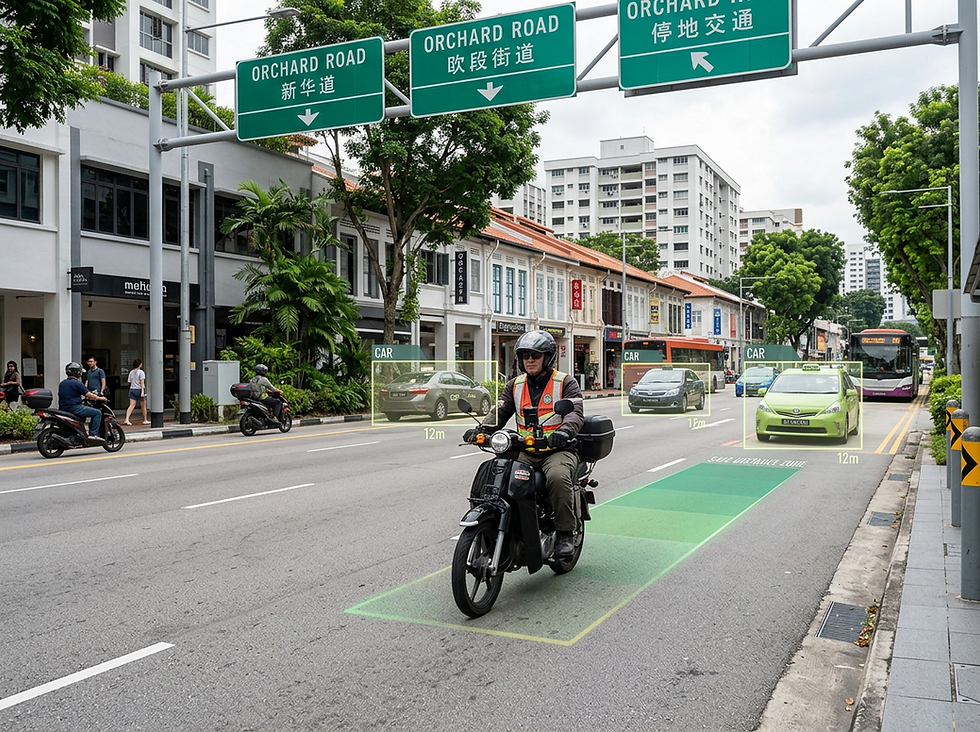
ARAS is usually associated with immediate safety alerts. A system may warn when a rider is too close to another vehicle, drifting from a lane, approaching a hazard, or braking too late. These alerts help riders react faster, especially during long shifts, bad weather, or heavy traffic.
That is useful, but fleets need more than a warning sound.
A single alert does not explain the wider pattern. Was the rider distracted? Was the route risky? Was the vehicle overloaded? Did the same rider trigger repeated warnings over several days? Did the incident happen during peak-hour traffic, in wet conditions, or near a known danger point?
A complete fleet monitoring platform puts ARAS data into context. It connects vehicle movement, rider behaviour, location, speed, and video. It turns separate signals into a clearer story.
That matters because fleet safety is not only about reacting to danger. It is about spotting risk early and reducing the chance that the same issue happens again.
For example, a rider who receives one forward-collision warning may simply have faced a sudden stop in traffic. A rider who receives repeated warnings every shift may need coaching, route adjustment, workload review, or closer supervision. Without a monitoring platform, both cases can look the same. With one, the difference becomes clear.
Prevention happens before the accident report
Many fleets only study safety data after an accident, complaint, or insurance claim. By then, the cost has already arrived.
A better approach is to use ARAS and monitoring data as an early warning system for the whole operation. The platform can show signs of unsafe habits before they lead to serious events.
Common risk signals include:
Frequent harsh braking
Sudden acceleration in crowded areas
Sharp cornering
Tailgating or close following
Speeding across repeated routes
Phone distraction or looking away from the road
Riding for long periods without enough rest
Repeated alerts near the same junction or delivery zone
None of these signals automatically means a rider is careless. Roads are complex. Singapore roads, for example, can shift quickly from smooth expressway traffic to tight estate roads, bus lanes, pedestrians, cyclists, rain patches, and delivery drop-off points.
The value is in patterns. One harsh brake may be unavoidable. Ten harsh brakes on the same route may show a training gap, a bad schedule, or a route that needs review.
A good platform helps fleet teams move from blame to prevention. It gives them enough information to ask better questions:
Is the rider rushing because the delivery window is unrealistic?
Does the route include repeated high-risk turns?
Is the vehicle maintained well enough?
Are certain riders triggering alerts after long shifts?
Do some teams need refresher training on following distance?
Are complaints linked to actual riding behaviour or mistaken identity?
This is where ARAS becomes more than a device. It becomes part of a safety management process.

Rider behaviour monitoring turns data into coaching
Fleet managers often face a difficult balance. They need to keep riders safe, protect the company, meet delivery targets, and treat workers fairly. Monitoring rider behaviour can support all of that, when it is used with clear rules and proper communication.
The goal should not be constant punishment. A better goal is fair, evidence-based coaching.
Behaviour data helps managers identify who needs support and what kind of support they need. Some riders may need reminders about speed. Others may need help with defensive riding, braking distance, wet-weather control, or route discipline. New riders may need closer observation during their first weeks.
This changes the quality of safety conversations.
Without data, feedback can sound vague: “Please ride more carefully.”
With data and video, feedback becomes specific: “On three trips this week, the system detected close following before heavy braking. Let’s review the clips and talk about how to keep more distance at junctions.”
That difference matters. Specific feedback is easier to understand, easier to measure, and harder to dismiss.
A fair monitoring system needs clear standards
Rider monitoring only works when people understand how it will be used. If riders feel watched without context, trust can drop. If they see that the system protects them from false complaints and unfair blame, adoption becomes easier.
A clear policy should explain:
What data is collected
When video is recorded
Who can access footage
How long data is kept
What counts as safe or risky behaviour
How coaching works
When disciplinary action may apply
How riders can raise concerns
Transparency protects both the fleet and the rider. It also helps ensure the platform supports safety rather than fear.
Good data can reveal good riders too
Monitoring is often discussed only in relation to mistakes. That misses a major benefit. A complete platform can also show positive behaviour.
Safe riders who manage distance well, avoid harsh braking, maintain steady speeds, and complete trips with low alert rates deserve recognition. Fleets can use this data for rewards, internal benchmarks, mentoring, or safer route planning.
When the system highlights both risk and good performance, it feels more balanced. It also shows that safety is not just a rulebook. It is a skill worth recognising.
Video evidence helps settle what really happened
After an accident or complaint, memory is unreliable. People are stressed. Witnesses may see only part of the event. A customer may report dangerous riding without the correct vehicle details. A rider may insist another road user caused the issue. An insurer may ask for proof.
Video evidence changes the investigation.
A fleet monitoring platform with road-facing and, where appropriate, cabin or rider-facing cameras can provide a clearer record of events. It can show the moments before, during, and after an incident. It can capture speed, direction, traffic conditions, road position, warning alerts, and rider response.
This evidence is useful in several situations:
Traffic accidents
Near misses
Customer complaints
Claims of reckless riding
Disputes with other road users
Damage discovered after a trip
Suspected theft or misuse
Internal safety reviews
Video does not remove the need for judgement. It should be reviewed carefully and fairly. But it gives investigators a stronger starting point than hearsay alone.
For example, a complaint may say a rider “nearly hit a pedestrian”. Video may show that the rider slowed down safely and the pedestrian stepped back without danger. Or it may confirm that the rider turned too fast near a crossing. In both cases, the fleet can respond with confidence.
That saves time. It also helps avoid unfair penalties, weak claims, and repeated arguments over what happened.
The strongest platform connects prevention, behaviour, and evidence
ARAS alerts, rider scores, GPS tracking, and video recording are useful on their own. They become far more powerful when they work together.
A complete fleet monitoring platform should help teams answer three core questions.
What is happening right now
Live monitoring gives fleet teams visibility when risk is active. If a vehicle is speeding, stopped unexpectedly, entering a restricted area, or triggering repeated warnings, the team can act quickly.
This does not mean every alert needs a phone call. Too many alerts can create noise. The platform should help prioritise what matters, such as repeated high-risk behaviour, severe braking, crash detection, or alerts in sensitive zones like schools, loading bays, or high-footfall areas.
What pattern is forming over time
Trend data is where prevention becomes practical. Managers can review behaviour by rider, vehicle, route, site, time of day, or team.
Patterns may show that:
A certain route creates more harsh braking
New riders need more training in the first month
Rainy shifts lead to higher alert rates
One vehicle has unusual handling behaviour
Delivery timing creates pressure during peak periods
Certain complaint types repeat in the same neighbourhood
These findings help the fleet improve operations, not just individual behaviour.
What happened during a specific event
When something goes wrong, the platform should make investigation simple. The team should be able to find the trip, open the event, view the video, check speed and location, and export the needed evidence according to internal rules.
The faster this process is, the better. Delayed investigations often lead to lost context, rising frustration, and slow claims handling.
A strong system connects the live alert, the rider profile, the trip record, and the video clip in one place. That gives a complete view from prevention to proof.
What fleets should look for in an ARAS monitoring platform
Not every system is built for real fleet work. Some focus only on camera recording. Some only track location. Some generate alerts but do not make it easy to review trends. The right platform should fit daily operations, not sit unused after installation.
Here are the features that matter most.
Feature | Why it matters |
Real-time ARAS alerts | Helps riders respond to danger while the trip is happening |
Behaviour scoring | Turns repeated habits into measurable coaching points |
Road video recording | Supports accident, complaint, and claims investigation |
Event-based clips | Makes it easier to review key moments without watching full trips |
GPS and trip history | Shows where and when events happened |
Fleet dashboard | Gives managers a practical view of risk across vehicles |
Custom alert settings | Reduces noise and focuses attention on serious events |
Data access controls | Protects privacy and limits footage access to authorised users |
Maintenance signals | Helps link safety events with possible vehicle issues |
Simple reporting | Supports coaching, insurance discussions, and internal reviews |
The platform should also be easy for riders to live with. Hardware must be durable, weather-resistant, and suitable for daily road conditions. Cameras should have clear views. Alerts should be noticeable without distracting the rider. Installation should not create loose wiring, battery drain, or maintenance problems.
A system that is hard to use will slowly be ignored. A system that fits the workday becomes part of normal fleet discipline.
Privacy and trust should be designed from the start
Video and behaviour monitoring affect people directly. Fleets should treat that seriously.
Good monitoring is not hidden. Riders should know what is recorded, why it is recorded, and how the information protects them as well as the company. Data should only be used for legitimate fleet purposes, such as safety, training, compliance, incident review, and asset protection.
Access should be limited. Not everyone needs to see video. Footage should not become entertainment, gossip, or informal punishment. Clear audit trails and retention periods help maintain trust.
When privacy is handled well, the platform becomes easier to accept. Riders can see that it gives them evidence when they are wrongly accused, supports safer working conditions, and helps managers fix pressure points in routes or schedules.
The real value is fewer surprises
A fleet that only reacts after incidents will always feel one step behind. ARAS changes that when it becomes part of a wider monitoring platform.
The safety alert protects the rider in the moment. Behaviour data shows where coaching is needed. Route and trip history reveal patterns. Video evidence helps settle accidents and complaints with facts. Together, they create a system that helps prevent problems before they become serious.
That is the bigger promise of ARAS for fleets. It is not just a warning device on a motorcycle or vehicle. It is a practical way to manage risk, support riders, protect the business, and build a safer operation with clearer evidence.
The best time to understand a fleet incident is before it happens. A complete monitoring platform makes that possible.


Comments