
RiderDome ARAS for OEMs What You Need to Know
Motorcycles are becoming more aware of the world around them. Cameras, AI, connected displays, and rider alerts are no longer ideas for distant concept bikes. They are moving into real development plans, and Advanced Rider Assistance Systems are becoming part of that shift.
This matters because motorcycles are not cars on two wheels. The space is tighter, the rider is exposed, the design language is more personal, and every component must earn its place. For OEMs, adding ARAS is not only a technical decision. It affects product identity, rider experience, model planning, and long-term platform strategy.
RiderDome was built around that reality. Our ARAS concept for OEMs is flexible by design. A manufacturer can work with a full kit solution, integrate only the board or system-on-chip, or use the software itself. The Rider Alert Unit, known as the RAU, can be supplied as part of the system, or fully designed by the OEM to match the look and feel of the bike.

What ARAS means for motorcycle OEMs
ARAS stands for Advanced Rider Assistance Systems. In practical terms, it refers to technologies that help riders become more aware of risks around them. That can include blind spot alerts, rear collision warnings, forward risk detection, and other forms of rider support.
For motorcycles, the goal is not to take over the ride. The goal is to add a layer of awareness without changing what riders value most: control, feeling, connection, and freedom.
A strong motorcycle ARAS system should support the rider in three ways:
Detect what the rider may miss
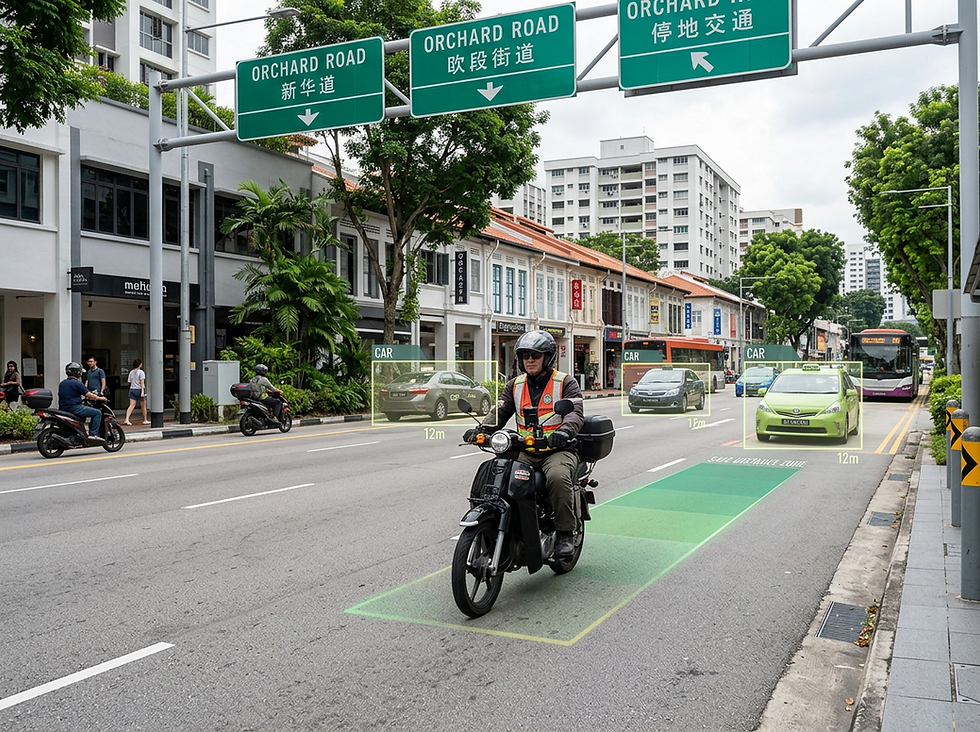
Motorcycles have narrow mirrors, shifting rider posture, and limited rear visibility. AI-based sensing can watch areas that are difficult for the rider to monitor all the time.
Warn without distracting
Alerts should be clear, quick, and easy to understand. A warning that requires thought can arrive too late.
Fit the bike
The hardware must suit the frame, style, vibration profile, weather exposure, and electrical architecture of the motorcycle.
That last point is where OEM integration becomes very different from an aftermarket product. An OEM is not adding a gadget. It is shaping a system that must feel like part of the motorcycle from the first sketch to the final production line.
Why OEMs need flexibility in ARAS integration
No two motorcycle manufacturers approach technology in the same way. Some want a ready-to-integrate package that shortens development time. Others already have their own electronics platform, display strategy, or industrial design language. Some may want to control almost every part of the rider interface.
That is why RiderDome ARAS for OEMs is designed around choice rather than a single fixed package.
The concept can support different levels of integration, depending on the OEM’s needs, resources, and model roadmap.
Integration approach | Best suited for | What the OEM gains |
Full kit solution | OEMs that want a complete ARAS package | Faster integration with a complete system architecture |
Board or SOC only | OEMs with their own housing, electronics, or platform plans | More control over packaging and product design |
Software only | OEMs with existing hardware or preferred suppliers | AI and detection capability added to an OEM-defined system |
This flexibility is not a small detail. Motorcycle product lines vary widely. A premium touring bike, an adventure model, an electric scooter, and a middleweight commuter do not share the same packaging needs. Even within one brand, the ARAS approach may differ across segments.
A full kit may suit one platform. A software-first approach may suit another. A board-level integration may be the best path for a bike where every millimetre matters.
The full kit solution gives OEMs a complete path
For many manufacturers, the most direct way to bring ARAS into a motorcycle programme is to start with a complete kit. This can include the sensing hardware, processing unit, software, alerts, and RAU components needed to create a working system.
A full kit approach can help when an OEM wants to reduce integration complexity. It gives engineering teams a clearer starting point and allows faster evaluation on test bikes.
This path can be useful for:
New model programmes where ARAS is being introduced for the first time
Pilot projects and validation fleets
Brands that want a complete reference system before deeper integration
OEM teams that prefer to test rider response before committing to a custom interface
A complete system also makes it easier to understand how detection, processing, and alerts work together in real riding conditions. That is especially useful for motorcycles, where vibration, lean angle, lane position, weather, rider posture, and surrounding traffic patterns can all affect system behaviour.
The key value is that the OEM does not need to build every layer from day one. The full kit can act as a production path, a development bridge, or a technical reference for future model-specific versions.
Board or SOC integration supports deeper product control
Some OEMs prefer a more embedded approach. They may already have their own electrical architecture, display systems, housings, connectors, or production processes. In that case, a full kit may be more than they need.
RiderDome can support an integration path based on the board or SOC. This gives the OEM access to the key processing capability while allowing the manufacturer to build the surrounding package in its own way.
This approach can make sense when the ARAS system needs to be part of a wider motorcycle platform. For example, the OEM may want ARAS to connect to an existing TFT display, work with a central vehicle control unit, or be packaged into a custom rear section.
Board-level integration can also help protect the brand’s design language. Motorcycles are emotional products. Riders notice the shape of the tail, the cockpit layout, the quality of the display, and the way every visible part sits on the machine. When the OEM controls the final packaging, ARAS can become part of the bike’s identity rather than an external feature.
This route usually requires closer engineering work between RiderDome and the OEM team. That collaboration can cover physical placement, thermal behaviour, power needs, data interfaces, testing, and validation. The result is a system that keeps the intelligence of RiderDome’s ARAS while allowing the OEM to define how it lives inside the bike.
Software-only integration fits OEM-led platforms
Some manufacturers want to take an even more tailored path. They may have preferred hardware suppliers, camera choices, compute platforms, and in-house validation methods. For these OEMs, RiderDome can support a software-only approach.
This allows the OEM to use RiderDome’s AI and detection logic within a system architecture they define. The value sits in the software layer, where the system interprets what the sensors see and turns that into meaningful rider alerts.
Software-only integration can support OEMs that want to:
Build ARAS into a broader connected vehicle platform
Use existing hardware across several models
Keep control over procurement and production choices
Align ARAS with their own display and alert philosophy
Reduce visible hardware changes across a product family
This path gives the greatest level of OEM control, but it also requires strong alignment on requirements. Sensor placement, field of view, compute performance, calibration, and alert behaviour must all work together. AI software cannot perform well if the surrounding system is not designed for its needs.
For OEMs with mature electronics teams, this can be the right long-term model. It lets ARAS become part of the manufacturer’s own technology stack while still benefiting from RiderDome’s focus on motorcycle-specific rider assistance.
The Rider Alert Unit can be supplied or fully OEM-designed
The Rider Alert Unit is one of the most visible parts of the ARAS experience. The RAU is how the rider receives alerts, so placement, brightness, timing, and design all matter.
RiderDome can provide the RAU as part of the system. This gives OEMs a ready path for rider notification, with a unit designed around clear and quick alerting.
At the same time, the RAU can be fully designed by the OEM. This is often the better choice for manufacturers that want the alert experience to match a specific bike family or brand design.
An OEM-designed RAU may be built into:
The mirror area
The cockpit or display surround
The handlebar zone
The fairing
A dedicated rider-facing light module
An existing instrument cluster
The right choice depends on the motorcycle. A scooter has different design needs from a large adventure bike. A sport model has different rider posture from a cruiser. An electric motorcycle may offer different integration points from an internal combustion model.
The RAU should look right, but it also has to work under real conditions. Sunlight, rain, night riding, gloves, vibration, and quick head movement all affect how alerts are perceived. A beautiful alert unit that riders cannot notice at the right moment does not serve its purpose.
That is why the RAU should be treated as both a design component and a safety-related communication channel.
What OEMs should evaluate before choosing an ARAS path
Choosing the right ARAS integration model starts with the motorcycle, not the technology. OEM teams should look at how the feature fits the product plan, the rider promise, and the development timeline.
A few questions can guide the decision.
How close is the model to production
A near-production bike may benefit from a more complete system, especially if timing is tight. A future platform with a longer development runway may suit board-level or software-level work.
How much control does the OEM need over visible parts
If the ARAS components are highly visible, design control becomes critical. In that case, custom RAU design and deeper hardware integration may matter more.
What electronics platform already exists
Some OEMs may already have the display, compute, or sensor strategy to support software-led integration. Others may prefer a complete package that reduces internal load.
How will alerts fit the riding experience
Alert design is a core part of ARAS. It must support the rider without causing noise or distraction. This includes visual language, placement, timing, and how alerts differ from other warning signals on the bike.
How will the system scale across models
An OEM may begin with one premium model, but ARAS planning should look beyond a single launch. The same base technology may need to fit multiple segments with different cost, design, and packaging needs.
AI is changing what motorcycles can become
AI is giving motorcycles a new layer of perception. The bike can begin to understand movement around it, recognise certain risk patterns, and support the rider with timely alerts.
This does not make the motorcycle less human. If designed well, it can make the riding experience more confident. The rider stays in control, while the machine adds awareness where human vision and attention are limited.
Across the industry, it appears that many OEMs are planning for ARAS to become part of upcoming models. That direction makes sense. Riders are becoming more familiar with assistance systems in cars, while cities and highways are becoming more complex. Motorcycles need technology that respects the ride while helping riders manage risk.
The next phase of motorcycle design will likely combine several forces:
AI-powered perception
Better rider displays
Connected vehicle features
Electric and hybrid platforms
New cockpit designs
Smarter alerts
More integrated hardware
For OEMs, this creates a chance to rethink how motorcycles communicate with riders. ARAS is not only a feature on a specification sheet. It can become part of the way a bike feels, responds, and protects the rider’s attention.
RiderDome’s role in the next generation of bikes
RiderDome is proud to be among the teams helping lead this shift. Our focus is clear: bring motorcycle-specific AI rider assistance to OEMs in a way that respects how motorcycles are designed, built, and ridden.
That means offering more than one path.
A manufacturer can begin with a full kit. Another can use the board or SOC. Another can bring RiderDome software into its own hardware plan. The RAU can be supplied, or it can be shaped fully by the OEM so it fits the bike’s look and feel.
This flexibility matters because the future of ARAS will not be one-size-fits-all. Each OEM has its own brand, rider base, engineering process, and model roadmap. The best ARAS solution is the one that fits those realities while still delivering clear value to the rider.
As motorcycles evolve with AI, the winners will be the systems that feel natural on the bike. They will be accurate, well packaged, easy to understand, and aligned with the rider’s instincts.
The road ahead is exciting. ARAS is becoming part of the future motorcycle, and RiderDome is ready to help OEMs build that future in the way that fits them best.


Comments