
ARAS for OEMs Beyond Alerts: The Connected AI Motorcycle Platform
Motorcycle safety technology is moving past a narrow focus on collision warnings. For OEMs, ARAS is becoming part of a larger connected vehicle strategy, one that combines AI perception, rider experience, fleet visibility, data services, and software updates over the life of the motorcycle.
That shift matters. A warning light or sound can help in a critical moment, but manufacturers now need platforms that fit into product roadmaps, digital services, commercial fleet needs, and future vehicle architectures. RiderDome addresses this broader requirement with a complete AI platform for motorcycles, where ARAS is a core component, not the whole story.

ARAS is only one layer of the OEM opportunity
Advanced Rider Assistance Systems have often been framed around warnings. Forward collision alerts, blind spot alerts, and unsafe following distance warnings are familiar examples. These features remain valuable, especially for two-wheel vehicles where riders face unique exposure on the road.
But OEM programmes now ask for more. Product teams want technology that can support:
premium consumer motorcycles
commuter models
electric two-wheelers
police and emergency response motorcycles
delivery and logistics fleets
connected aftersales services
future software-defined vehicle platforms
That wider scope changes the role of ARAS for OEMs. It is no longer a standalone feature added late in the design process. It becomes part of the motorcycle’s digital foundation.
RiderDome’s approach reflects this change. Its AI-powered, camera-based ARAS gives riders real-time assistance, while the wider platform adds recording, connectivity, cloud services, mobile tools, fleet capabilities, and continuous AI improvement.
The platform combines AI, cameras, connectivity, and cloud services
A modern motorcycle platform needs to sense the road, process information quickly, communicate with external systems, and improve over time. RiderDome brings these layers together in one architecture.
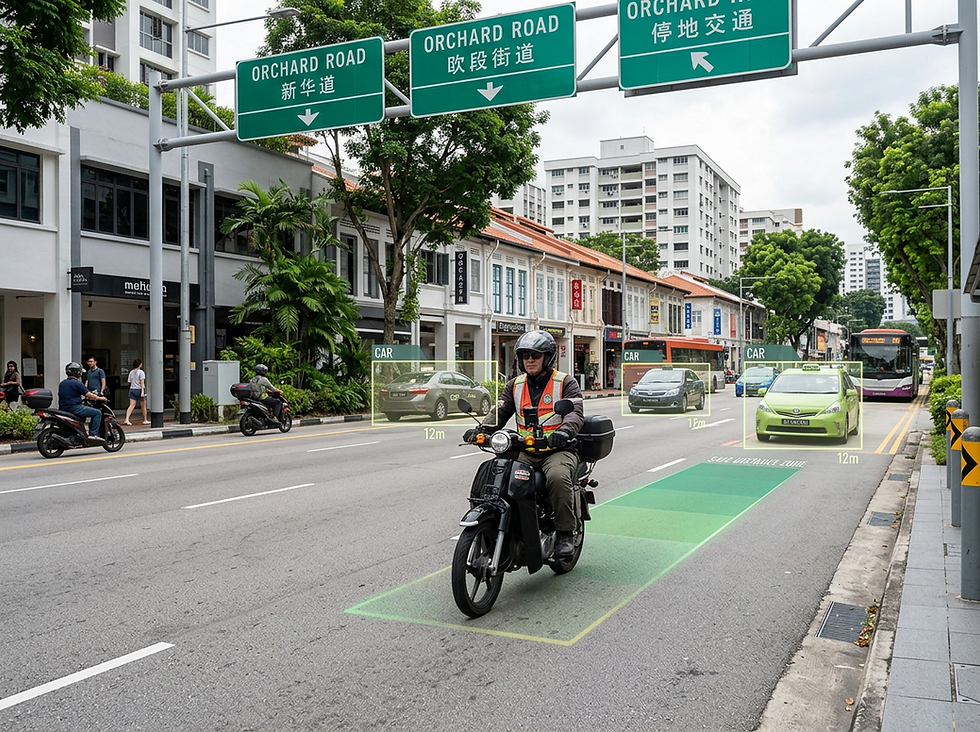
The ARAS layer uses AI and camera-based perception to detect relevant road situations and support rider alerts. Cameras are well suited to motorcycles because they can provide rich visual context while allowing flexible packaging across different vehicle types.
The same camera system can also support dashcam and video recording. This gives riders and fleet operators a useful record of journeys, incidents, and operating conditions. For consumer motorcycles, this can support convenience and confidence. For commercial fleets, video can help with incident review, rider coaching, and operational transparency.
Connectivity is another key part of the platform. RiderDome supports technologies such as LTE/5G, GPS, Bluetooth, and Wi-Fi, allowing the motorcycle to connect with riders, cloud systems, and fleet tools. This is what turns a safety device into a connected motorcycle system.
The rider experience extends beyond the alert unit
A useful platform must work for the person on the motorcycle. RiderDome supports this through a rider mobile app and a dedicated Rider Alert Unit, or RAU.
The RAU gives riders clear, immediate information while riding. Depending on the OEM programme, RiderDome can provide the RAU as part of the system, or the OEM can fully customise it to match the motorcycle’s design language. This matters for manufacturers because rider-facing components must feel native to the vehicle, not like an aftermarket add-on.
For some models, the RAU may be a highly visible part of the safety experience. For others, the OEM may prefer a more integrated interface that blends with existing displays, controls, or cockpit design. RiderDome’s flexible approach supports both paths.
The mobile app adds another rider touchpoint. It can support access to recordings, settings, ride-related information, connectivity features, and services linked to the cloud. This helps OEMs build a relationship with riders beyond the point of sale, while keeping the experience connected to the motorcycle itself.
Commercial motorcycles need fleet tools, not only rider alerts
The requirements for fleet motorcycles are different from private-use motorcycles. A delivery operator, service provider, or municipal fleet may need to manage many vehicles, riders, routes, and incidents. In that setting, ARAS is valuable, but it is only one part of the operational picture.
RiderDome includes a fleet management platform for commercial motorcycles, designed to support connected fleet use cases. With video, GPS, cloud services, and vehicle connectivity, fleet operators can gain better visibility into how motorcycles are used in the field.
This can support practical needs such as incident review, vehicle status visibility, rider behaviour analysis, and service planning. For OEMs, it creates an opportunity to support commercial customers with a stronger digital offering. A motorcycle can become part of a managed, connected fleet ecosystem rather than a standalone asset.
That is especially relevant as two-wheel fleets continue to grow in delivery, urban mobility, security, and public service roles across dense city environments.

Flexible integration helps OEMs match different vehicle programmes
No two OEM programmes are identical. A flagship touring motorcycle, an urban electric scooter, and a commercial delivery motorcycle have different cost targets, packaging limits, electrical systems, and user interfaces.
RiderDome supports several integration models so manufacturers can choose the right fit.
Complete hardware and software solution
AI processing board
Software-only integration
Custom RAU options
A full RiderDome system for OEMs that want an end-to-end platform.
A system-on-chip approach for OEMs that want to integrate RiderDome intelligence into their own architecture.
A path for manufacturers with existing hardware and vehicle systems.
RiderDome can supply the Rider Alert Unit, or the OEM can customise it fully to match the motorcycle design.
This flexibility helps product and R&D teams plan across multiple lines. A brand may use a complete solution for one programme, a board-level integration for another, and a software-led integration for a future architecture. The core AI capability can remain consistent while the physical implementation changes.
That consistency matters because motorcycle platforms are becoming more software-defined. OEMs want technology that can improve after launch, support new use cases, and adapt across model years.
Over-the-air updates keep the platform improving
A connected AI platform should not stand still after production. RiderDome supports over-the-air updates and continuous AI improvements, allowing the system to evolve after motorcycles are delivered.
For OEMs, this changes the product lifecycle. Software updates can refine performance, add supported functions, and improve the rider experience over time. AI models can also benefit from ongoing development as road conditions, rider needs, and vehicle applications expand.
This approach aligns motorcycles with the broader shift happening across mobility. Software is becoming a long-term product layer, not a one-time engineering deliverable.

The future of ARAS is connected and software-defined
OEMs are no longer looking only for a warning system. They need a scalable, AI-powered platform that can support consumer motorcycles, commercial fleets, digital services, and long-term software development.
RiderDome brings these pieces together: AI-powered camera-based ARAS, dashcam recording, LTE/5G, GPS, Bluetooth and Wi-Fi connectivity, a rider app, cloud services, fleet management, flexible integration options, and continuous improvement through over-the-air updates.
That is what makes the next generation of motorcycle assistance different. The future of ARAS for OEMs is intelligent, connected, and software-defined. RiderDome is proud to help manufacturers bring that vision to life.


Comments